What are food environments? Food environments refer to the physical, economic, political and socio-cultural contexts which affect people’s food-related decisions and their nutritional status. It considers factors such as the availability, accessibility or affordability of foods, as well as food marketing. We are surrounded by different food environments which have an impact on the foods and drinks we consume, for example at home, school or work, in supermarkets, neighbourhoods, but also online.
A nutritious diet is beneficial for children’s health and contributes to their growth, development and wellbeing. In addition, eating habits which are learned during childhood often continue into adulthood. This, and the fact that an unhealthy diet is a risk factor for several diseases, underlines the importance of establishing healthy eating habits early in life. There is a variety of factors which have an influence on children’s dietary habits and gaining more insight into these factors can help to alter children’s food consumption for the better. Eating behaviour is not only affected by individual factors, like food preferences or taste, but also by factors which are situated outside of the individual, such as the food environment.
For my master’s thesis, I examined how different food environments were related to schoolchildren’s food consumption, by using data from the DAGIS Salo study. This study included children attending grades 3 to 6 in primary schools in the Salo municipality in Finland. In my thesis I found some interesting results on the relationship between the home- and digital food environment and children’s fruit, vegetable and sugar-rich food and drink consumption.
Within the home food environment, I looked at the availability and accessibility of fruits, vegetables and sugar-rich foods and drinks. Availability refers to whether certain foods and drinks are present in the home, whereas accessibility is about how easily foods can be found or consumed by the children. Fruits in a fruit bowl on the kitchen counter are more accessible than those stored in the refrigerator, for example. I found that those children with a healthier home food environment, meaning a higher availability and accessibility of fruits and vegetables and a lower availability of sugar-rich food and drinks, consumed fruits and vegetables more often. While this is a rather logical finding (children cannot eat something that is not available), it highlights the importance of not only having plenty of fruits and vegetables at home which are easily accessible, but to restrict the availability of sugar-rich food and drinks in addition to that.
I also assessed whether there was a relationship between the digital food environment and children’s food consumption. The participating children were asked how often they had seen advertising for sweets, soda or energy drinks during the previous month in different digital media, such as social media, webpages, console games or smartphone applications. The results showed that children who were highly exposed to these types of food advertising consumed sugar-rich food and drinks more frequently, compared to children who did not see these types of advertisements as often.
All in all, the results of my thesis imply that children’s fruit and vegetable consumption could be promoted by increasing its availability and accessibility at home, while at the same time restricting the availability of sugar-rich food and drinks. It also lays bare the societal responsibility of implementing policies or laws which restrict or prohibit the digital marketing of unhealthy food products, to protect children against the harmful effects of digital food marketing.
Read the full thesis in Helda: Associations between aspects of the home-, school- and digital food environment and food consumption in school-aged children
Practical tips for parents to encourage your child’s fruit and vegetable consumption:
- Let the child decide which fruits and vegetables to buy from the grocery store so that there are always fruits and vegetables at home that the child likes.
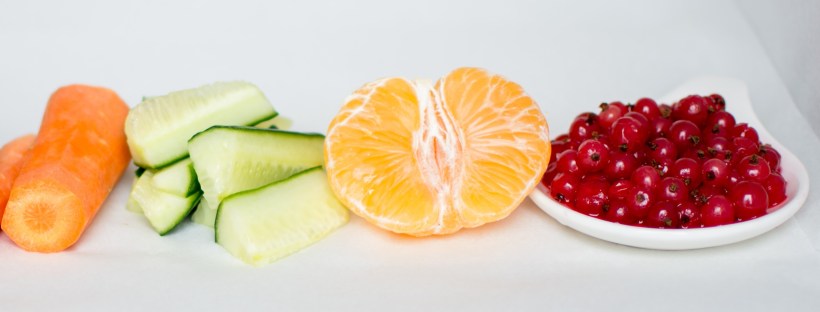
- Make it convenient for the child to eat fruits and vegetables. Cut carrots and cucumber or have a peeled orange in the fridge ready for snack time.
Author: Mayke Kramer
 DAGIS
DAGIS 